
Capesize rates and the iron ore trade: what's really driving the BCI
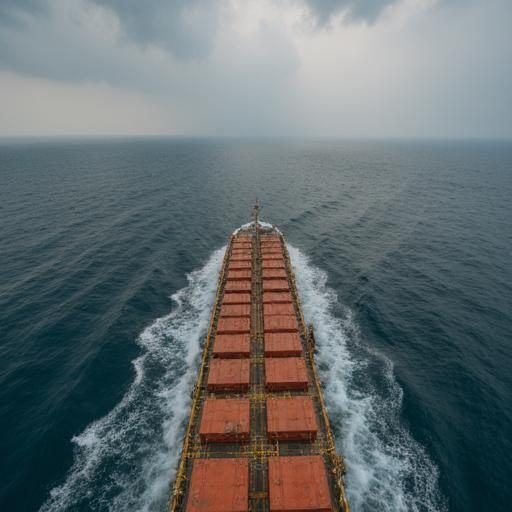
Of the four Baltic sub-indices, the Capesize Index (BCI) is the one that moves fastest and furthest — and for a simple reason: Capesize demand is overwhelmingly a function of a single commodity flow, iron ore, moving between a small number of major origin and destination pairs. When that flow shifts, the BCI feels it before any other segment does.
The two routes that set the tone
Two corridors dominate Capesize demand: Brazil to China (the Tubarão–Qingdao run, tracked as the C3 route) and Western Australia to China (the C5 route). Both are reported daily through freight differential indices, and the spread between them tells owners and charterers which loading region is currently tightest. Per Hellenic Shipping News's MMI Daily Iron Ore Index Report, C3 and C5 freight differentials have been trading below the levels seen a month earlier — a signal that the extra tonnage absorbed by longer Brazil-origin voyages has been easing relative to the shorter Australian run.
A third, smaller but increasingly relevant flow is West Africa to China — Guinea and Liberia-origin bauxite and iron ore cargoes that load on Kamsarmax and Capesize tonnage and add meaningfully to ton-mile demand precisely because the haul is longer than either of the two established corridors.
What moved the index this month
- The Baltic Exchange recorded the BDI at a two-week high in early July, with Capesize gains cited as the primary driver, according to Baird Maritime.
- Weekly route-by-route positioning across Capesize, Panamax, Supramax and Handysize is tracked in Hellenic Shipping News's Weekly Dry Market Monitor, which remains the clearest single read on where rate direction is heading segment by segment.
- Longer average voyage distances tied to current Middle East Gulf routing disruption are adding incremental ton-mile demand that shows up first in the largest, longest-haul segment — Capesize.
Reading the BCI as a charterer or an owner
Because Capesize demand concentrates so heavily around iron ore, the BCI is unusually sensitive to Chinese steel production data, Brazilian export volumes out of Vale's terminals, and Australian port and rail performance — more so than to broad macroeconomic sentiment. A charterer fixing Capesize tonnage should watch the C3/C5 differential as a leading indicator of which loading region will be tightest over the coming weeks, while an owner positioning tonnage should treat West Africa as the corridor most likely to reward patience given its longer average haul.
Marcenta's chartering desk cross-checks every Capesize indication against the current C3/C5 spread and the latest Baltic Exchange print before it goes to a client — not last week's number.
Sources: Hellenic Shipping News — MMI Daily Iron Ore Index Report, Hellenic Shipping News — Weekly Dry Market Monitor, Baird Maritime. This article is market commentary from the Marcenta chartering desk and does not constitute freight advice — for a fixture-specific read, contact the desk directly.