
Baltic Dry Index Rebounds to 2,863 as Capesize Volatility Rolls Into the New Week
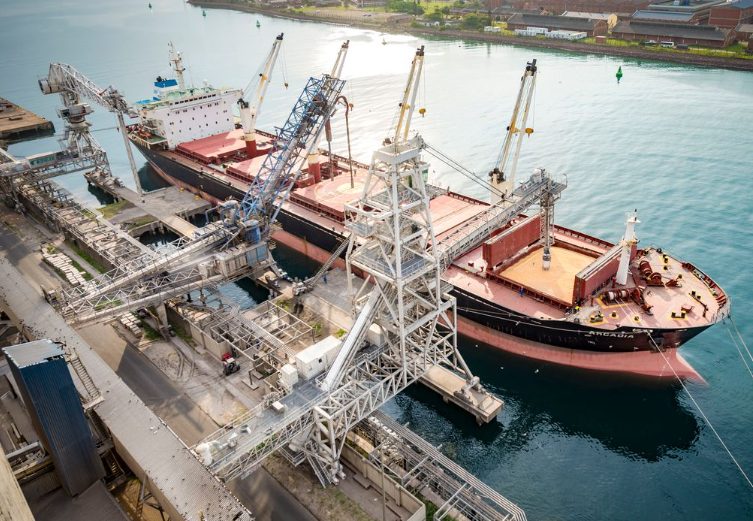
The Baltic Dry Index (BDI) closed at 2,863 on Friday, up 19 points on the day but still well off the low-3,000s levels seen earlier in the month. The index has been unusually choppy over the past week: a 107-point drop on Wednesday to 2,939 was followed by a sharper 95-point fall to 2,844 on Thursday, before Capesize tonnage pulled the market back up into Friday’s close. For owners and charterers alike, the swings underline how quickly sentiment on the larger sizes can move the whole index in either direction.
Capesize Swings Set the Tone
The Baltic Capesize Index (BCI) has been the main driver of the week’s volatility, sliding from 4,712 on Wednesday to 4,469 on Thursday before rebounding 69 points to 4,538 by Friday’s close. Average daily earnings for capesize bulk carriers followed the same pattern, dipping to around $40,528/day mid-week before recovering to roughly $41,155/day. Pacific iron ore and coal demand remains the key swing factor, and with several majors still active in the market, we expect the segment to stay the most reactive part of the index through the rest of August. Clients fixing capesize tonnage on voyage or time charter terms should budget for this kind of day-to-day swing rather than anchoring to a single print.
Panamax Softens While Smaller Segments Hold Firm
The Baltic Panamax Index (BPI) eased 34 points to 2,228 on Friday, extending a quieter week for the segment as average daily income slipped to around $20,055/day. The Baltic Supramax Index (BSI) moved the other way, adding 9 points to 1,622, while the Baltic Handysize Index (BHSI) was essentially flat, up 1 point to 866. On the voyage side, Baltic Exchange Capesize benchmarks C3 (Tubarao–Qingdao) and C5 (West Australia–Qingdao) firmed further in Week 32 to $35.57/mt and $16.23/mt respectively, consistent with the stronger Capesize earnings trend. The spread between the larger and smaller fleet segments remains worth watching for owners weighing where to reposition tonnage.
Bunker Costs Ease, Providing Some Relief
Bunker prices have pulled back from the highs seen earlier in the month. VLSFO in Singapore is now quoted at $820.50 per tonne, down $10.50, with Rotterdam at $655.00 (-$6.00) and Fujairah at $810.00 (-$5.00); Piraeus bucked the trend, firming $3.50 to $821.00. Brent crude was last quoted at $88.52 per barrel. With freight rates holding up on the Capesize side while bunker costs soften, the net effect is modestly supportive for voyage margins this week, though the picture can shift quickly if Middle East tensions reignite crude volatility.
Sources: HandyBulk & Baltic Dry Index Daily Updates, Trading Economics, Ship & Bunker. This article is for general market information only and does not constitute freight advice; for a fixture-specific read, contact the desk directly.