
A Counter Kills the Offer Before It, No Matter How Much You Liked That Offer
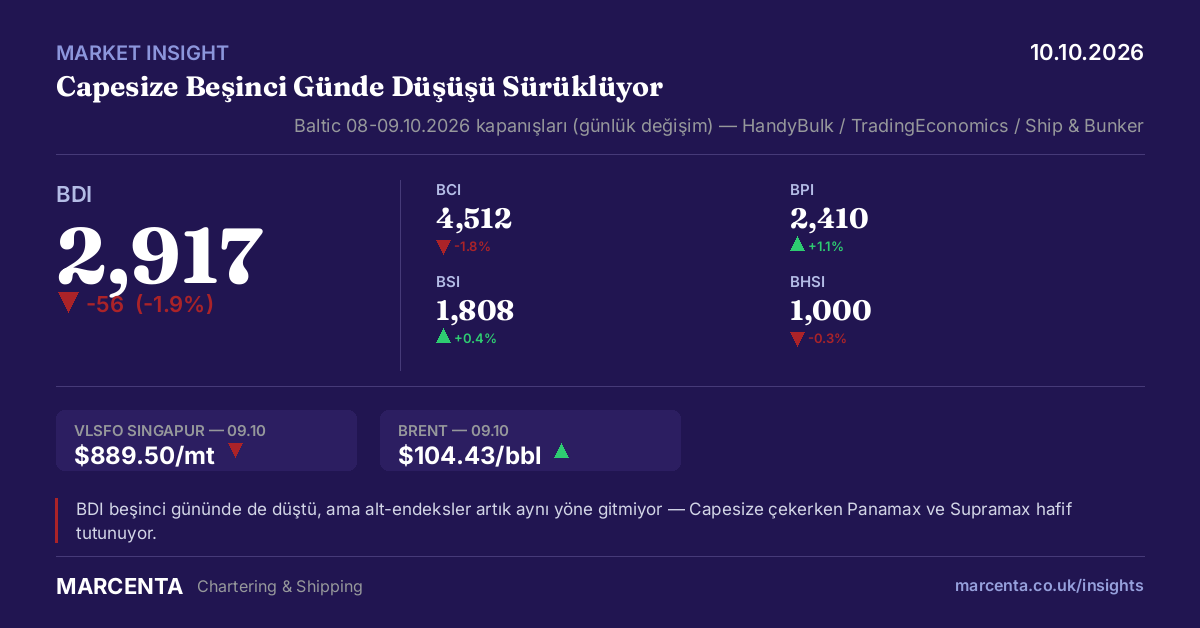
The Baltic Dry Index closed at 2,917 on 9 October, down 56 points from the previous session and its fifth consecutive decline (tradingeconomics.com, hellenicshippingnews.com). The drop isn't uniform. Capesize pulled the index down again, off 1.8% to 4,512 on 8 October, while Panamax actually gained 1.1% to 2,410 and Supramax ticked up 0.4% to 1,808 (handybulk.com, 8 October — HandyBulk hadn't posted the 9 October sub-index close as of writing). Three rate directions in one index on the same day. Worth remembering before anyone calls this "a soft market" in one sentence.
But the market isn't today's lesson. A basic rule of chartering discipline is, and brokers break it under pressure more often than they'd admit.
Here's the scenario, and most people on a desk have lived some version of it. Owner quotes a rate. Charterer doesn't like it and comes back with a counter, five dollars a tonne lower. Thirty minutes pass. Then the charterer calls again: forget the counter, we'll take your original number after all.
The instinct is to just confirm it and move on. That's the mistake. The counter killed the original offer the second it was made. What's sitting on the table now isn't an acceptance, it's a brand new offer from the charterer, at the owner's original figure, and the owner is free to say no, ask for more, or walk. Nothing obliges them to honour a number they quoted half an hour ago to a party who already rejected it once.
This is Baltic Code territory, not a technicality. The whole point of treating each counter as a fresh offer is that it keeps both sides honest about where the negotiation actually stands. Blur that line and you get owners who think they're bound to a rate they're no longer bound to, charterers who assume a rejected counter can be quietly resurrected, and a broker caught in the middle holding two different stories about what was agreed. That's not a paperwork problem, it's how a broker's word stops being trusted on the next fixture.
The fix is almost boring: say it out loud, every time. "That's a fresh proposal at the original rate, subject to owner's reconfirmation." One sentence, and both parties know exactly where they stand.