The Man Who Controlled the Suez Without Owning It
Maritime History, Market Analysis, Shipping Insights Freight Market, Global Trade, Logistics, Maritime Strategy, Shipbroking, Shipping Disruption, Suez Canal, Suez Crisis, Supply Chain Risk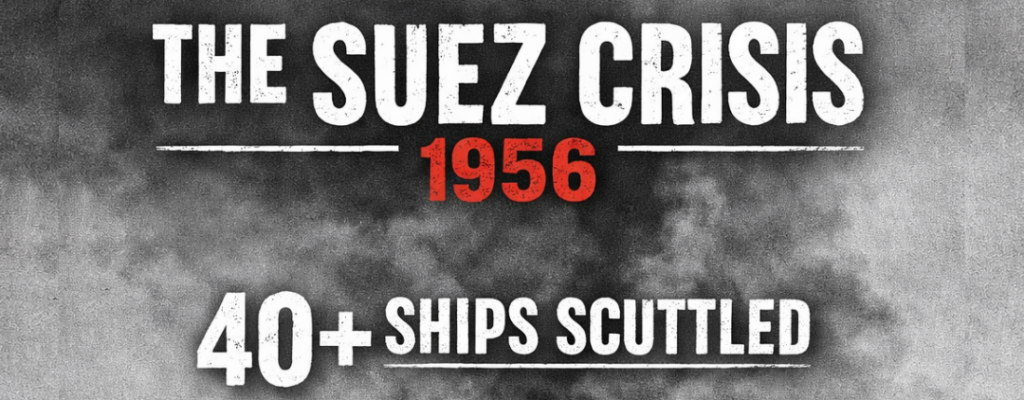
In 1956, one man managed to choke one of the most critical arteries of global trade — without firing a naval shot at sea.
Not by owning ships.
Not by controlling cargo.
But by controlling access.
What Actually Happened?
WHO?
Gamal Abdel Nasser — President of Egypt
WHAT?
The nationalisation of the Suez Canal and the deliberate blocking of it during the Suez Crisis
WHEN?
July–November 1956
WHERE?
Suez Canal — linking Europe to Asia
WHY?
To assert sovereignty, counter Western influence, and control a chokepoint that handled ~10% of global trade even at the time
How Was the Suez Canal Blocked?
Here’s the part most people don’t know:
Egypt scuttled over 40 vessels in the canal — deliberately sinking ships to block transit.
Not a naval battle.
Not a blockade fleet.
Just controlled obstruction.
The Hidden Impact on Global Shipping
- Over two-thirds of European oil supply was disrupted
- Freight rates spiked overnight
- Ships were forced to reroute via the Cape of Good Hope
- Voyage durations increased by 10–15 days
This event marked one of the earliest modern examples of supply chain disruption through maritime chokepoints.
What Most People Still Miss
This wasn’t about war.
It was about control of flow.
You don’t need to control ships —
you need to control where ships can’t go.
Why This Still Matters Today
From Suez to Panama to the Black Sea, the same dynamics continue to shape global shipping markets.
Disruption creates both:
- risk
- opportunity
And in volatile freight markets, advantage belongs to those who:
- anticipate disruption early
- price risk correctly
- reposition vessels efficiently
Final Thought
If a major chokepoint shuts overnight, the question is not if the market reacts.
The real question is:
How fast can you reposition before everyone else does?