Study Case: The Case of the Sweating Steel & The Ventilation Gamble
Cargo Claims, Cargo Operations, Chartering Insights, Chartering Knowledge, Dry Bulk Insights, English Law, Marine Claims, Maritime Law, Maritime Operations, Shipbroking Insights, Shipping Insights Bulk Carrier, Cargo Care, Cargo Claims, Cargo Sweat, Charter Party, Condensation Damage, Dew Point, Dry Bulk Shipping, Hague-Visby Rules, Logistics, Marine Claims, Maritime Law, Maritime Operations, P&I Club, Ship Sweat, Shipbroking, Steel Cargo, Steel Coils, Supramax, Ventilation Clauses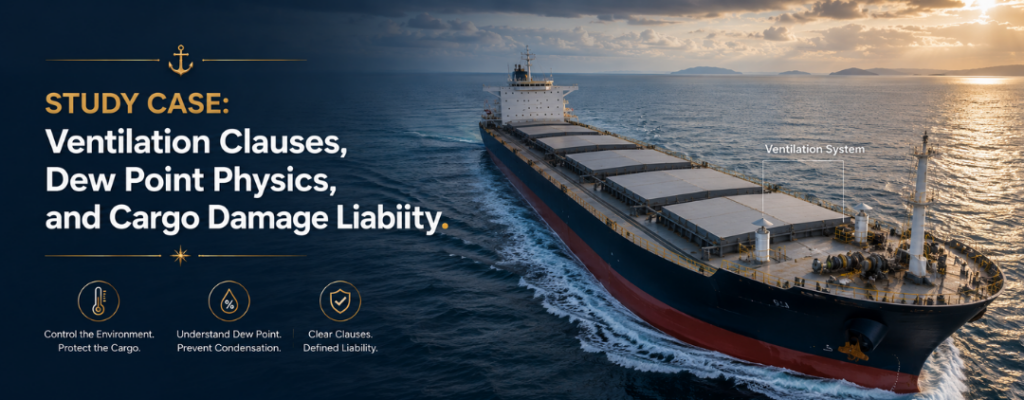
Welcome to another technical anchor-watch on the Marcenta desk. Today, we dive into a classic maritime dilemma where thermodynamics meets English Maritime Law. It is a scenario that tests the sharpest post-fixture and claims managers, proving that a master’s decision to open or close a hatch ventilation flapper can result in a multi-million-dollar cargo claim.
The Scenario
A modern Supramax vessel, the MV Marcenta Endurance, loads 35,000 metric tonnes of prime prime hot-rolled steel coils in Dalian, China during the freezing month of January. The cargo temperature at the time of loading is stabilized at -2°C. The vessel is fixed on a voyage charter to discharge in Jakarta, Indonesia, passing through the tropical, high-humidity zones of the South China Sea.
The Charter Party includes standard terms, but features a critical rider clause: “The Master shall safely carry, care for, and properly ventilate the cargo in accordance with the Charterer’s specific instructions and international guidelines to avoid condensation and rust damage.”
The Operational Turning Point
As the vessel sails south, the ambient air temperature and humidity skyrocket. By day 5, the outside air temperature reaches +28°C with a relative humidity of 85%, creating an atmospheric Dew Point of +25°C.
The Master faces a critical decision:
- Option A (Ventilate): Introduce the warm, tropical outside air into the holds to refresh the atmosphere.
- Option B (Seal the Holds): Keep the ventilation completely shut and rely on the existing hold environment.
The Master, under pressure from the Charterer’s voyage instructions to “ensure continuous ventilation during fair weather,” opens the mechanical ventilation fans.
The Disaster
Upon arrival in Jakarta, the hatches are opened. The steel coils are dripping with water, and heavy atmospheric red rust has formed across the surfaces of the prime steel. The receivers immediately file a $1.2 million cargo damage claim for breakdown of quality.
An independent surveyor steps on board and determines that the damage was caused by Cargo Sweat—the warm, humid tropical air introduced by the fans instantly condensed on the freezing steel surfaces (which were still near 0°C), acting like a cold soda can on a hot summer day.
The Legal Bulmaca: Who Pays?
- The Master’s Dilemma vs. Cargo Care: Under English Law, the Master has an overriding duty to care for the cargo under the Hague-Visby Rules (Article III, Rule 2). However, did following the Charterer’s general instruction to “ventilate in fair weather” absolve the Owner, or should the Master have known that the physics of the Dew Point made ventilation illegal in this setup?
- Ship’s Sweat vs. Cargo Sweat: If the Master had not ventilated, and water had condensed on the cold steel ship walls instead, dripping onto the cargo (Ship’s Sweat), who would run the risk?
- The Interplay of Clauses: Does a standard clause protecting the Owner against “perils of the sea” or “inherent vice of the cargo” stand up when the ventilation logbooks prove the crew actively introduced the humid air?
To explore how our operational desks actively manage risk and verify structural charter party clauses before the voyage begins, read our News & Insights archive.
For the definitive guidelines on checking dew points and preventing steel coil degradation, reference the cargo care manuals at the Standard P&I Club.
#ShipWithMarcenta