The 1,400-Tonne Time Bomb: A Sarcastic Lesson in Maritime Risk Management
Chartering Insights, Global Trade, Global Trade & Geopolitics, Maritime History, Maritime Operations, Navigation & Safety, Risk Management in Trade, Shipping Insights, Shipping Operation Explosive Cargo, Marine Insurance, Maritime Risk, Maritime Safety, Salvage Operations, Shipping History, Shipwreck, SS Richard Montgomery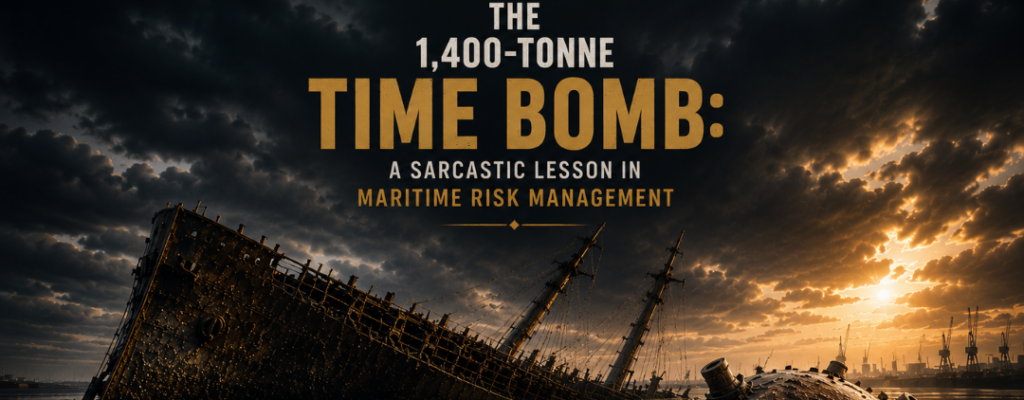
In the modern London shipbroking scene, we often discuss “risk” in terms of fluctuating freight indices, demurrage disputes, or the latest geopolitical flare-ups in the Red Sea. However, for those of us based in the UK, the most visceral example of maritime risk isn’t found on a digital chart or a Reuters terminal; it is visible from the shores of Sheerness at low tide.
Protruding from the Medway Estuary like rusted fingers are the masts of the SS Richard Montgomery. To the uninitiated, it looks like just another casualty of the World War II maritime effort. To those in the industry, it is a 1,400-tonne reminder that some “Force Majeure” events stay with you for nearly a century.
The Cargo That Never Arrived
The story is a broker’s nightmare. In August 1944, this American Liberty ship arrived in the Thames with a cargo that would make any modern P&I club faint: several thousand tonnes of high explosives, including “blockbuster” bombs and cluster devices. Due to a series of navigational errors and a poorly chosen anchorage, the vessel ran aground on the Nore sandbank.
Within weeks, the hull snapped. While half the cargo was salvaged, the remaining 1,400 tonnes of TNT stayed trapped in the sunken holds.
Pragmatism vs. Catastrophe
Why is it still there in 2026? This is where the sarcasm of maritime reality kicks in. For over 80 years, the official stance of the Maritime and Coastguard Agency (MCA) has been a masterclass in “If it isn’t broken, don’t touch it—because if you touch it, everything breaks.”
Experts suggest that any attempt to relocate the munitions could trigger one of the largest non-nuclear explosions in history. We aren’t just talking about a splash; we are talking about a 5-metre tidal wave rushing up the Thames and shattering windows across the coastline. Consequently, the wreck is a permanent “Excluded Zone” on every Admiralty Chart.
What Can Modern Brokers Learn?
At Marcenta, we pride ourselves on “Where cargo meets the right vessel.” The Montgomery is a case of the right cargo meeting the wrong sandbank. It teaches us three crucial lessons:
- Technical Oversight is Eternal: A mistake in 1944 is still a liability in 2026.
- Risk Assessment Isn’t Always About Fixing: Sometimes, the most professional maritime solution is knowing when a situation is too volatile to interfere with.
- Local Knowledge is King: Navigating the Thames and Medway requires more than just GPS; it requires an understanding of the ghosts that lie beneath.
While we aren’t currently fixing Liberty ships full of TNT, we apply that same rigorous risk assessment to every Supramax or Handysize we charter. We ensure your cargo meets a vessel that isn’t just “available,” but technically sound and professionally manned.
To see how we manage active, non-explosive cargo and vessel matching today, explore our latest Market Insight & Activity page.
For more in-depth maritime analysis, keep an eye on the latest Baltic Exchange updates.
Does the Montgomery represent a failure of salvage or a triumph of pragmatic safety? Whether you are moving minerals or agricultural commodities, don’t let your business become a historical footnote.
#ShipWithMarcenta