The Right of Lien on Cargo: The Ultimate Shipowner’s Shield Under English Law
Chartering Knowledge, Dry Bulk Shipping, Drybulk, English Law, Maritime Law, Shipping Terms Cargo Lien, Charter Party, Demurrage, Dry Bulk Logistics, English Maritime Law, Freight Disputes, Right of Lien, Shipbroking, ShipWithMarcenta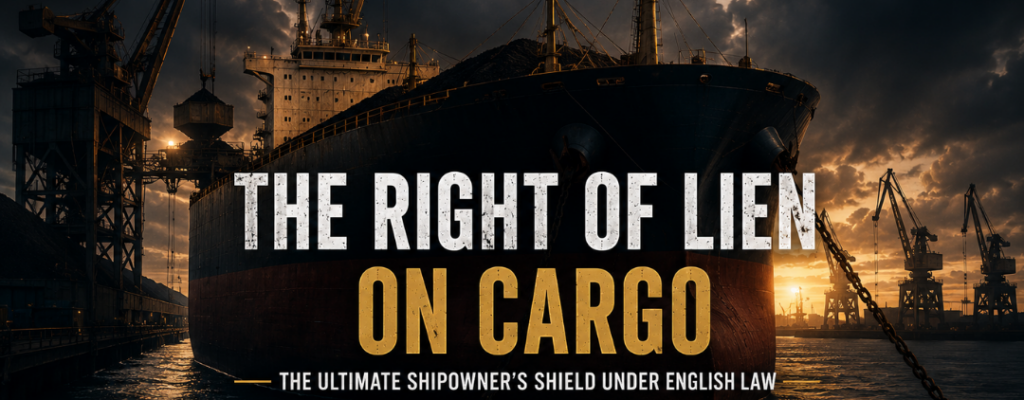
In the fast-paced theatre of global dry bulk shipping, cash flow is the lifeblood of any operation. Contracts are built on trust, but they are secured by ironclad legal mechanisms. When a charterer or cargo interest decides to delay payments—whether it is outstanding freight, deadfreight, or heavily disputed demurrage—the shipowner doesn’t just sit back and send polite reminder emails.
They trigger one of the most potent, legally disruptive, and slightly sarcastic tools in the maritime arsenal: the Right of Lien on Cargo.
What is a Maritime Lien on Cargo?
In simple terms, a “lien” is a legal right to retain possession of someone else’s property until a debt owed by that person is discharged. In our world, it means the shipowner can legally refuse to discharge the cargo at the destination port until they get paid. Imagine a security guard holding your luggage until you pay for your hotel room, but on a scale of 50,000 tonnes of metallurgical coal.
The Technical Boundaries Under English Law
Most international fixtures are governed by English Law, which views the Right of Lien with a very precise, clinical eye. To successfully exercise a possessory lien on cargo, three strict conditions must align:
- Contractual Authorization: Under English common law, a shipowner does not have an automatic right of lien for demurrage or deadfreight. It must be explicitly written into the Charter Party (e.g., Clause 8 of the standard GENCON form).
- Continuous Possession: The owner must maintain physical control of the cargo. The second that cargo leaves the ship’s tackles or a bonded warehouse under the owner’s name, the lien vanishes into thin air.
- The Debt Must Be Due: You cannot exercise a lien for a payment that is due next Tuesday. The breach must have already occurred.
The Sarcastic Dilemma of Holding Cargo Hostage
The irony of exercising a lien is that it is often a double-edged sword. If an owner refuses to discharge grain or coal to force a payment, the vessel is sitting idle at the berth or anchorage. Who pays for that port time? Technically, it accumulates as more demurrage, but if the charterer is already defaulting, the owner is essentially running up a bill against themselves while blocking a major port artery.
Furthermore, if the cargo is perishable (like agricultural commodities), holding it hostage under the hot sun while lawyers argue in London is a spectacular way to turn a freight dispute into a multi-million-dollar cargo damage claim.
How Marcenta De-Risks the Transaction
At Marcenta, our philosophy is that a lien should be a clause you deeply understand but never have to use. When we focus on Where cargo meets the right vessel, we perform rigorous due diligence on both sides of the fixture. We audit the commercial reliability of charterers and the structural integrity of owners.
Our post-fixture support ensures that laytime and freight payments flow transparently, avoiding the operational gridlock that leads to legal standoffs at the discharge port. We make sure your shipping contracts protect your capital without freezing your supply chain.
To see our current list of vetted, active tonnage and secure cargo opportunities, explore our latest Market Insight & Activity dashboard.
For the exact legal phrasing and standardized contractual clauses regarding liens, we recommend reviewing the latest updates from the London Maritime Arbitrators Association (LMAA).
Conclusion: The Right of Lien is a nuclear option. It is a brilliant display of legal leverage, but it requires masterful execution. Don’t let your next dry bulk voyage turn into a possessory standoff. Fix your next vessel with the expertise that keeps the cargo moving.
#ShipWithMarcenta