
Kamsar & Boffa: The Two Ports Moving the World’s Aluminium
Bauxite, Capesize, China Trade, Commodity Shipping, Dry Bulk Insights, Dry Bulk Market, Dry Bulk Shipping, Global Trade, Global Trade & Geopolitics, Maritime Analysis, West Africa #ShipWithMarcenta, aluminium, aluminium industry, bauxite, boffa, Bulk Carrier, cape of good hope, Capesize, Chartering, china, commodity trading, Dry Bulk Shipping, Freight Market, Global Trade, guinea, jiangyin, kamsar, maritime economics, maritime intelligence, Maritime Logistics, qingdao, ShipBroker, shipping market, Vessel Chartering, west africa, yantai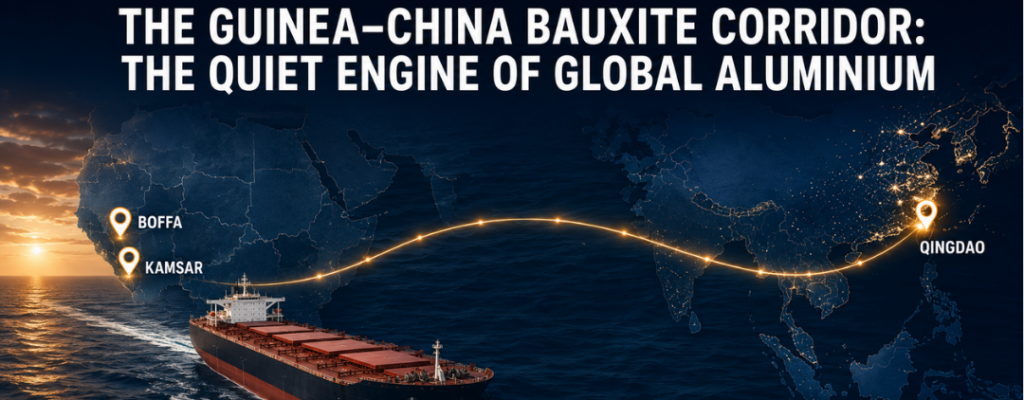
Guinea’s Bauxite Exports Continue to Break Records
Guinea exported 183 million tonnes of bauxite in 2025, marking its fourth consecutive annual production record. The country has firmly established itself as the world’s largest bauxite exporter and one of the most strategically important suppliers to the global aluminium industry.
Approximately 74% of Guinea’s total bauxite exports were shipped directly to China, reinforcing the country’s critical role in the international raw materials market.
Kamsar and Boffa Dominate the Global Bauxite Trade
The backbone of this trade is concentrated in just two export terminals.
Kamsar and Boffa together accounted for 72% of all global bauxite discharges, making them among the most strategically significant bulk export ports anywhere in the world.
Their importance extends far beyond West Africa. These ports have become the primary gateways feeding China’s aluminium industry with a continuous flow of high-volume raw materials.
China’s Dependence on Guinea Continues to Grow
Demand remained exceptionally strong during early 2026.
In March 2026, China imported 18.12 million tonnes of Guinean bauxite, representing a 29.6% month-on-month increase.
During the first quarter of 2026, Guinea exported 60.9 million tonnes, up 25.3% year-on-year.
Today, Guinean bauxite supplies approximately 74% of China’s total bauxite import requirements, making the trade corridor structurally indispensable to global aluminium production.
Capesize Bulk Carriers Power the Corridor
Every tonne of this cargo moves by sea aboard Capesize bulk carriers.
These vessels, typically ranging between 180,000 and 210,000 DWT, are specifically designed to transport massive bulk cargo volumes efficiently over long ocean voyages.
Typical trading routes originate from Kamsar and Boffa, sail around the Cape of Good Hope, and discharge cargo throughout Asia, including ports such as:
- Qingdao
- Yantai
- Jiangyin
- Other major Far East and South Asian import terminals
This shipping corridor represents one of the world’s largest continuous dry bulk trade flows.
Marcenta Chartering & Shipping
Marcenta Chartering & Shipping is a London-based independent shipbroker specialising in the Capesize dry bulk market.
We work closely with shipowners, operators and cargo interests across:
- West Africa
- Black Sea
- Mediterranean
- European Continent
- Far East
Our focus is connecting available Capesize tonnage with cargo opportunities across the world’s major dry bulk trading routes.
Cargo enquiries and tonnage offerings
Suggested External Links
- International Aluminium Institute (IAI)
Global aluminium production, sustainability, industry statistics and market reports. - BIMCO (Baltic and International Maritime Council)
Maritime contracts, shipping market analysis and industry guidance. - International Maritime Organization (IMO)
International regulations governing global shipping and maritime safety. - Ministry of Mines and Geology of Guinea
Official information on Guinea’s mining sector, regulations and investment framework. - General Administration of Customs of the People’s Republic of China (GACC)
Official customs statistics covering China’s import and export data.