The Carroll A. Deering: When Crew Mutiny Melts the Cargo Protection Shield
Chartering Insights, Chartering Knowledge, Chartering Strategy, Marine Insurance, Maritime Law, Navigation & Safety, Operational Risk, Risk Management in Trade, Ship Chartering, Shipbroking Insights #ShipWithMarcenta, Barratry, Cargo Claims, Cargo Insurance, Cargo Liability, Carroll A. Deering, Charter Party, Crew Management, Crew Misconduct, Dry Bulk Shipping, Ghost Ship, Hull Insurance, Human Error, Marine Insurance, Maritime History, Maritime Law, Mutiny, Mutiny at Sea, Operational Risk, Risk Management, Seaworthiness, Shipbroking, Shipping Safety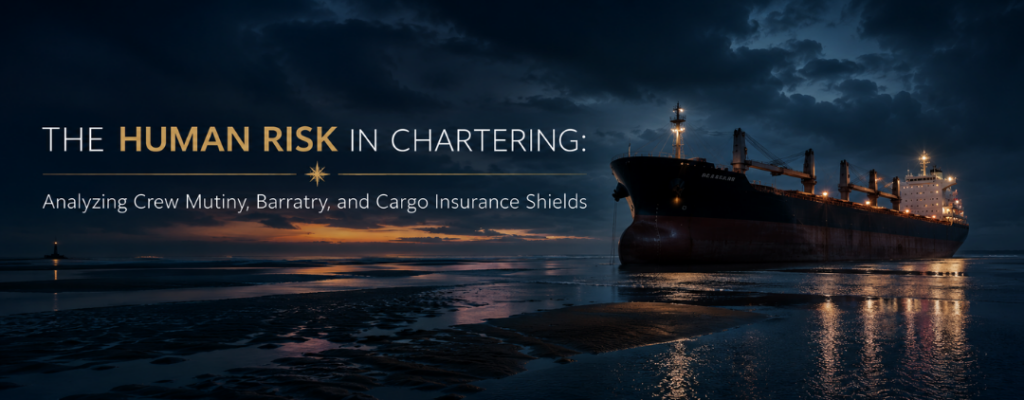
In the modern era of commercial shipping, we focus heavily on technical risks. We track electronic bills of lading, monitor automated cargo temperatures, and run satellite checks on vessel speed. We like to believe that risk is entirely manageable through data. Yet, maritime history has a sarcastic habit of reminding us that the most volatile element on any vessel isn’t the dangerous cargo or the North Atlantic weather—it is the human infrastructure on the bridge.
Consider the legendary enigma of the Carroll A. Deering—the massive five-masted commercial schooner found hard aground on the treacherous Diamond Shoals of North Carolina in January 1921. The vessel was a physical phantom: her sails were fully set, the lifeboats were missing, and the dinner for the next day was found completely prepared in the galley. Yet, not a single human soul was on board.
While popular fiction loves to blame the Bermuda Triangle, the joint federal investigation launched by the FBI, the US Navy, and the Treasury Department pointed toward a much more terrestrial, commercial nightmare: A brutal crew mutiny and operational sabotage.
The Secret History: The Barbados Warning
During a commercial stop in Barbados on her return transit from Rio de Janeiro to Norfolk, the aging master, Captain Willis Wormell, privately confided to a fellow captain that his crew was unruly, undisciplined, and that he deeply mistrusted his first mate. When the ship passed the Cape Lookout Lightship days later, witnesses reported a chaotic deck scene where un-uniformed crew members shouted through megaphones that the vessel had mysteriously “lost both her anchors”.
When the Coast Guard finally boarded the stranded vessel on the shoals, the captain’s logbook, navigation equipment, and personal belongings were stripped. The crew had vanished into thin air, leaving a perfectly buoyant, cargo-laden hull to be torn apart by the sea.
The Deering Sabotage Matrix:
┌────────────────────────────────────────────────────────┐
│             Crew Mutiny / Intentional Abandonment     │
└───────────────────────────┬────────────────────────────┘
                            │
               Did the Owner participate?
            ┌───────────────┴───────────────┐
            ▼                               ▼
     [ YES: Fraud ]                 [ NO: BARRATRY ]
   Owner loses all insurance      Crew committed a willful crime
   and faces massive liability.   against the Owner's asset.
                                            │
                                            ▼
                           [ The Cargo Owner's Trap:  ]
                           [ Must sue Owner for breach]
                           [ of contract of carriage  ]
The Legal Shockwave: Enter ‘Barratry’
For cargo underwriters and charterers, the Carroll A. Deering case opened a terrifying legal chasm. When a crew revolts against their captain, takes sabotage actions (like destroying anchors), and abandons a sound vessel, the act is classified under maritime law as Barratry.
Barratry is defined as any willful, fraudulent, or illegal misconduct committed by the master or crew to the prejudice of the shipowner or charterer, without the owner’s knowledge or complicity. Under standard maritime law and the foundational rules that preceded the Hague-Visby era:
- The Owner’s Shield: Because barratry is a crime committed against the shipowner, the owner is often shielded from direct liability if they can prove they exercised due diligence in hiring a competent crew.
- The Cargo Owner’s Trap: Because barratry is an excluded peril in many standard historical bills of lading, cargo owners are frequently left stranded. They cannot collect easily from the shipowner and must hope their own cargo insurance policy features a specific “Barratry Extension” clause to cover the loss.
The Modern Lesson for 2026 Fleet Operations
The sarcastic reality of the Carroll A. Deering is that the ship survived the Atlantic storms perfectly well—she was destroyed simply because her human crew failed.
At Marcenta, when we emphasize Where cargo meets the right vessel, we perform an analysis that goes far beyond checking the age of the hull or steel thickness. We evaluate the crew retention rates, technical management structures, and operational reputations of the shipowners we select for your fixtures.
By avoiding cut-rate, poorly managed fleets with high crew turnover, we minimize the catastrophic risk of operational negligence and contract breaches. We ensure your cargo is backed by absolute professionalism, keeping your supply chain secure from both environmental gales and human friction.
To check our current, fully audited vessel availability and secure cargo flows backed by top-tier technical management, visit our live Market Insight & Activity portal.
For original maritime archives, FBI investigation transcripts, and 1921 government logs regarding the Diamond Shoals incident, the U.S. National Archives and Records Administration (NARA) holds the definitive files.
#ShipWithMarcenta