Study Case: The Costly Sarcasm of ‘Grain Clean’ Standards
Cargo Operations, Chartering & Contracts, Chartering Insights, Chartering Knowledge, Chartering Strategy, Dry Bulk Shipping, Drybulk, English Law, Marine Claims, Maritime Law, Maritime Operations, Operational Risk, Risk Management in Trade, Ship Chartering, Shipbroking Insights, Shipping Operation #ShipWithMarcenta, Cargo Hold Inspection, Charter Party, Dry Bulk Shipping, Grain Cargo, Grain Clean Standards, Maritime Law, NYPE Charter, Petcoke Contamination, Surveyor Authority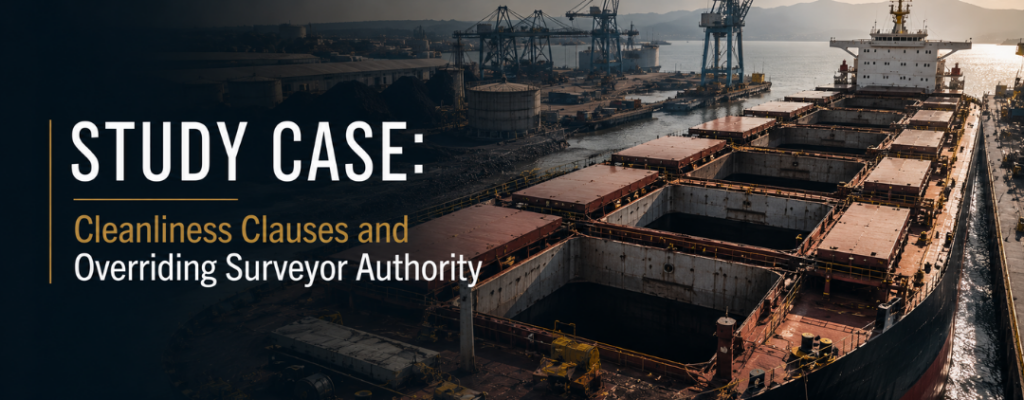
Welcome to another intellectual anchor-watch on the Marcenta desk. Today, we escape the straightforward world of simple delays and step into the legally pedantic, financially brutal arena of cargo hold preparation. If you think a quick wash with fresh water is enough to transition a vessel from carrying dirty bulk to high-grade agricultural products, English Maritime Law has a very expensive surprise for you.
The Scenario
A modern Panamax vessel, the MV Marcenta Pioneer, finishes discharging a heavy cargo of petcoke (petroleum coke) in Rotterdam. She is immediately fixed under a NYPE charter party to sail in ballast across the Atlantic to load premium milling wheat in the US Gulf for discharge in Egypt.
The Charter Party contains a standard, uncompromising rider clause: “Vessel’s holds on arrival at loading port to be clean, dry, odourless, and in all respects ready to receive Charterer’s intended grain cargo to the satisfaction of the Charterer’s independent surveyor.”
The Twist: The crew spends the entire ballast voyage scraping, pressure-washing, and applying chemical detergents to the holds. To the naked eye, the silver-painted steel looks pristine. The vessel arrives at the US Gulf, serves her Notice of Readiness (NOR) at 08:00 AM on a Monday, and the Charterer’s surveyor steps on board.
Two hours later, the surveyor issues a formal Rejection Certificate. The reason? He used a white glove to wipe the upper undersides of the hatch covers and found microscopic traces of black petcoke dust. Furthermore, he claims the holds have a faint “chemical soap smell” from the cleaning agents used by the crew.
The Charterer immediately cancels the NOR, puts the vessel off-hire, and demands that the Owner hires professional shore-side cleaners at a cost of $80,000 to remediate the holds. Meanwhile, the grain market dips, and the Charterer is looking for any excuse to stall the loading or escape the high freight rate entirely.
The Clues & The Legal Minefield
- The Validity of the NOR: Was the NOR validly served at 08:00 AM if the vessel was physically “unready” at the time of inspection?
- The ‘Grain Clean’ Standard: Does English Law support a surveyor’s absolute right to reject a vessel based on microscopic residue on the underside of hatch covers, or must the contamination risk be realistic to the actual cargo sitting in the bottom of the holds?
- The Chemical Odour: The clause specified the holds must be “odourless.” Does a cleaning agent smell constitute a breach, or is it a natural byproduct of fulfilling the obligation to clean?
For previous deep dives into how structural charter party clauses protect your cash flow during port inspections, read our comprehensive News & Insights archive.
To understand the international baseline for solid bulk handling and grain cleanliness parameters, always refer to the BIMCO Cargo Hold Inspection Guidelines.
#ShipWithMarcenta