What If!? — The Night the Pilot’s Word Was Absolute Law
Global Trade, Maritime Law, Navigation & Safety, Operational Risk, Port Operations, Risk Management in Trade, Shipbroking Insights, Shipping Intelligence Aegean Sea Disaster, ISM Code, Maritime Safety, Master’s Authority, Navigation Risk, Pilotage Liability, Pilotage Risk Management, Port Risk, Shipbroking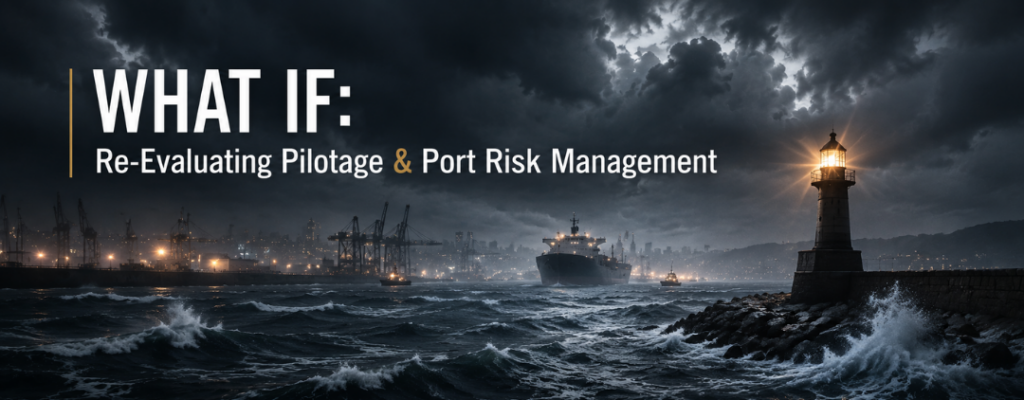
In the modern commercial shipping sector, we treat the arrival of a vessel at the pilot station as a moment of relief. The deep-sea transit is over; local experts are taking the wheel. However, maritime history loves to hide its sharpest lessons in these moments of transition.
Go back to December 1992, off the coast of A Coruña, Spain. The OBO (Ore-Bulk-Oil) carrier Aegean Sea, loaded with nearly 80,000 tonnes of crude oil, was executing a night approach under heavy visibility restrictions and gale-force winds. Instructed by the local pilot station to proceed with the transit despite the deteriorating weather, the vessel struck a reef, snapped in two, and caught fire, cloaking the entire city in black smoke.
At Marcenta, we look back at this disaster through the lens of a critical question: What if the Master had ignored the pilot station’s pressure and remained at outer anchorage?
The Technical Breakdown of the Decision
The Aegean Sea was navigating a notoriously narrow channel. The visibility dropped below 100 metres just as the vessel reached the critical point of no return.
Under English Law and international maritime codes, the presence of a pilot on board does not relieve the Master of their ultimate responsibility for the safety of the vessel. Yet, the commercial pressure to berth and avoid port delays is a powerful force.
What If… The Vessel Had Stayed At Anchor?
If the Master had exercised his overriding authority under the ISM Code (which was heavily shaped by disasters like this) and refused the night entry:
- The Re-Writing of Pilotage Liability: Traditionally, port pilots enjoy massive legal immunity. If the Aegean Sea hadn’t entered, the industry wouldn’t have faced the fierce legal battles that forced ports to modernize their Vessel Traffic Services (VTS) and take shared responsibility for safe routing.
- The Acceleration of Double-Hulls: The vessel was a single-hulled carrier. The sheer speed with which she ruptured accelerated international regulations. Without this disaster, the mandatory phase-out of single-hull tonnage might have lagged by another decade, altering the supply dynamics of the global dry bulk and liquid markets we manage today.
- The Sarcastic Truth About ‘Local Knowledge’: The disaster proved that local knowledge is only valuable if it respects global weather data. It taught brokers that a port being “open” doesn’t mean it is “safe.”
How We Apply the ‘What If’ Philosophy
At Marcenta, when we look at Where cargo meets the right vessel, we don’t just look at the port of destination as a coordinate on a map. We evaluate the operational limitations. Our freight market intelligence extends to assessing port infrastructure, seasonal weather patterns, and local navigation risks. We ensure that our fixtures are backed by charter party terms that grant the Master full commercial freedom to prioritize safety over a tight schedule.
To see how we proactively manage risk and track secure, active fixtures across global routes today, check our Market Insight & Activity desk.
For detailed legal analyses on pilotage immunity and historical maritime liability cases, the International Maritime Organization (IMO) provides comprehensive regulatory reviews.
If you were the Charterer with a cargo facing hefty demurrage penalties, would you support a Master who refuses a pilot’s order to enter a port during a gale, or would your legal team already be drafting a breach of contract claim? Where do you draw the line between caution and commercial performance?
#ShipWithMarcenta