
Coordinating Chartering Decisions Across Multiple Trade Lanes
Baltic Exchange, Drybulk, Ship Chartering Chartering Decisions, Ship Chartering, ShipBroker, Trade Lanes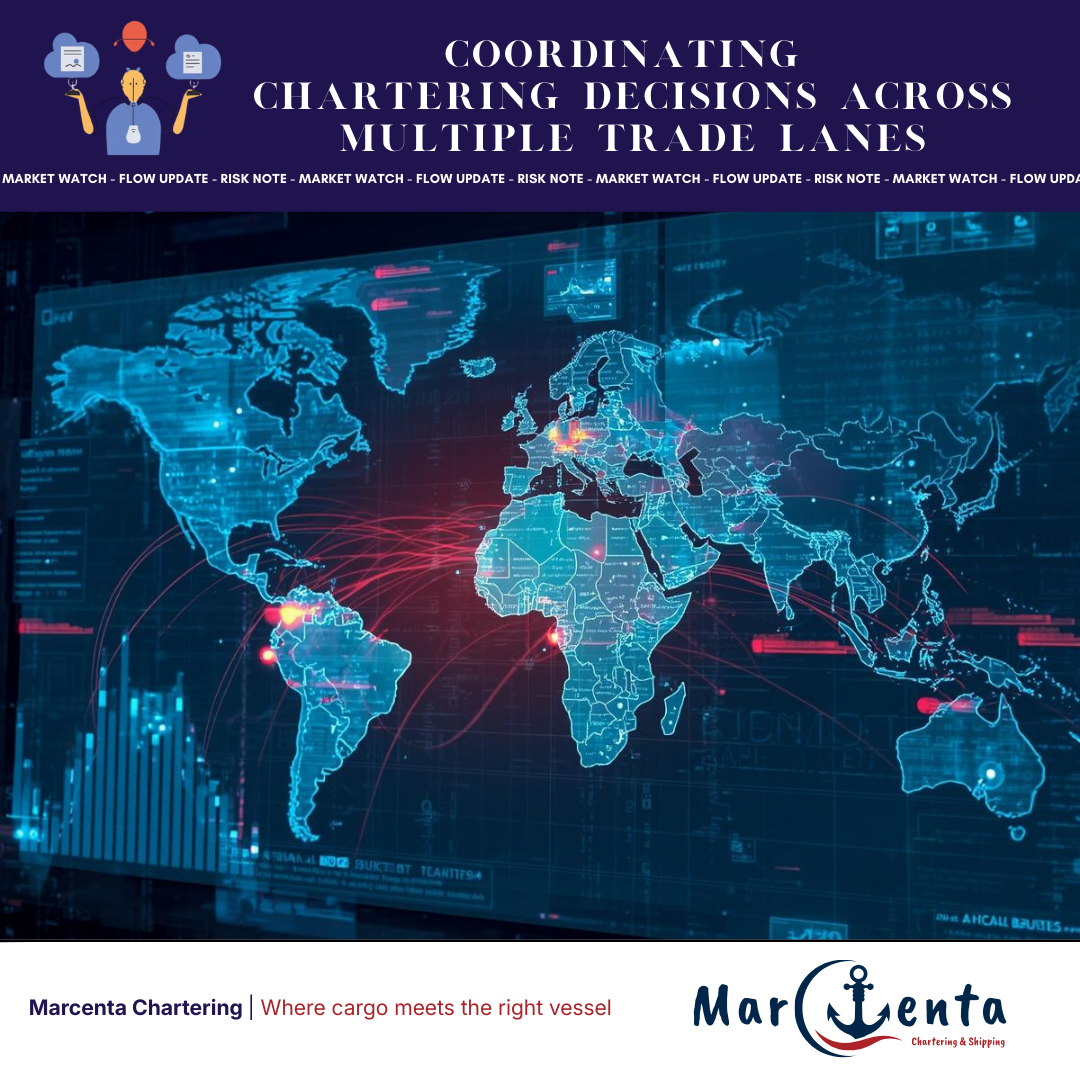
The Complexity Behind Modern Chartering
In today’s dry bulk market, chartering decisions are rarely confined to a single trade lane. Cargo owners and operators increasingly manage parallel movements across multiple regions, each with different freight dynamics, port conditions and vessel availability. Coordinating these flows requires more than competitive freight rates. It demands timing, information alignment and an understanding of how one fixture can influence exposure elsewhere. Without structured coordination, fragmented decisions often result in higher overall freight costs and operational inefficiencies (BIMCO).
Managing Risk Across Regions
Multi-lane chartering introduces layered risk. A delay in one loading region can disrupt vessel positioning for another trade, while unexpected congestion or weather impacts can ripple across an entire fixing programme. Effective coordination allows charterers to rebalance vessels, adjust laycans and prioritise cargoes without compromising contractual commitments. In practice, this means aligning market intelligence from the Atlantic and Pacific basins and acting before dislocation becomes visible to the wider market (Baltic Exchange).
Strategic Broker Involvement
From a commercial perspective, coordinated chartering is where experienced brokerage adds tangible value. By overseeing cargo commitments holistically rather than transaction by transaction, brokers help clients maintain flexibility while protecting freight exposure. This approach is particularly effective in volatile markets, where rapid shifts in sentiment can penalise reactive decision-making. Coordinated execution across trade lanes transforms chartering from a series of isolated fixtures into a coherent freight strategy.