Common Charter Party Clauses That Impact Profitability
Charter Party, Drybulk, Fixture, News & Insights, Uncategorized Charter Party, Commercial Risk, Impact Clause, Laytime, PANDI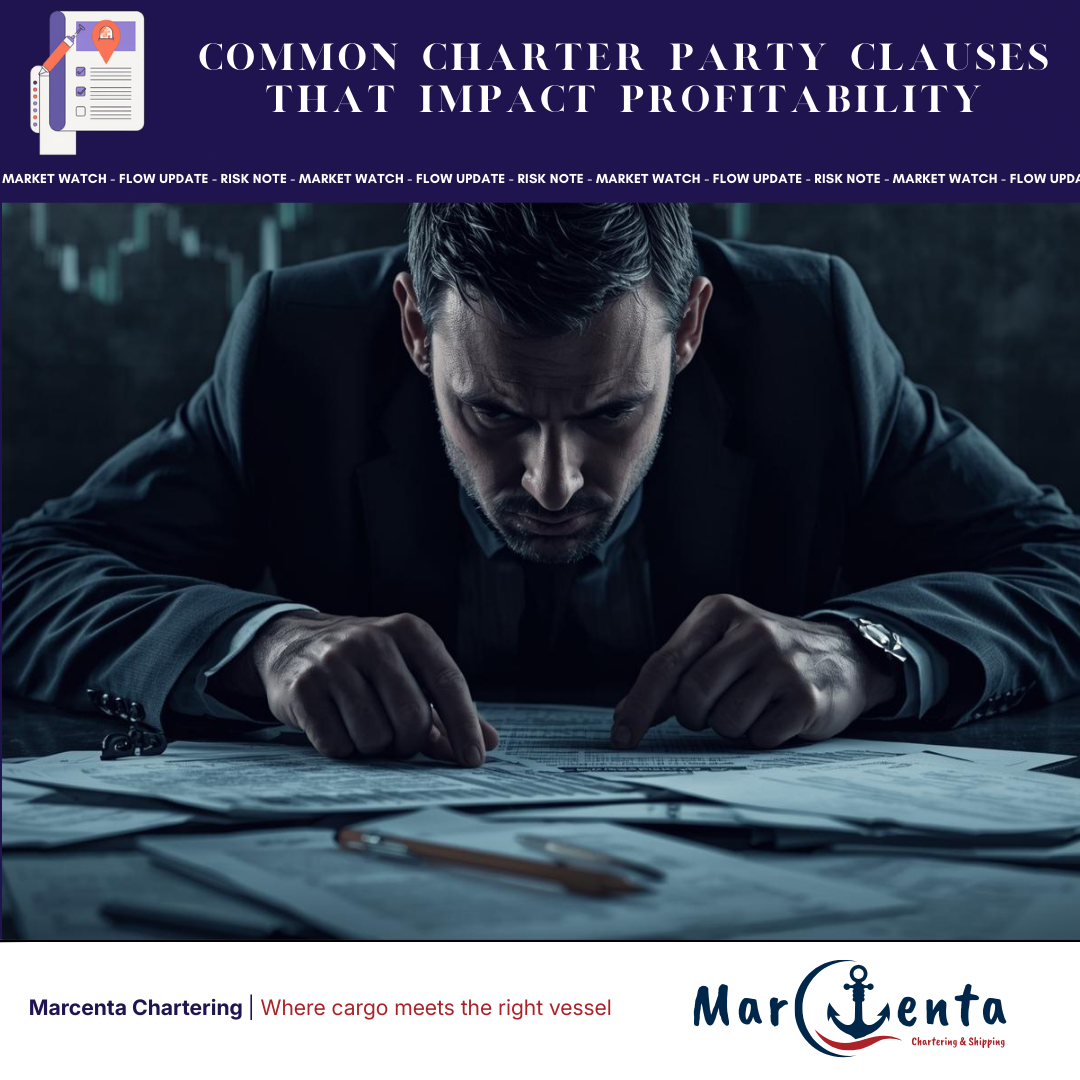
Why Clauses Matter More Than Freight
In dry bulk chartering, profitability is often assumed to be determined by freight rates alone. In practice, however, charter party clauses frequently have a greater financial impact than the agreed rate itself. Clauses governing laytime, demurrage, dispatch and operational responsibilities can significantly alter voyage economics if not properly assessed. Many disputes and cost overruns originate not from market conditions, but from contractual wording that was underestimated during negotiations (BIMCO).
Paragraph 2 – High-Impact Clauses Charterers Should Watch
Laytime definitions remain one of the most critical areas affecting profitability. Ambiguities around notice of readiness, weather working days or port congestion exceptions can quickly convert an apparently competitive fixture into a loss-making voyage. Similarly, clauses related to fuel responsibility, speed and consumption warranties and deviation allowances can materially affect operating costs. These provisions are often treated as standard, yet their interpretation varies widely across trades and jurisdictions (International Group of P&I Clubs).
Paragraph 3 – Commercial Risk and Strategic Review
From a strategic standpoint, reviewing charter party clauses should be integrated into freight decision-making rather than treated as a legal afterthought. Experienced market participants understand that commercial risk management begins at the contract stage. Aligning operational reality with contractual obligations helps prevent disputes, protects margins and strengthens long-term relationships between owners and charterers. In competitive markets, attention to contractual detail is often what separates consistently profitable operators from those exposed to avoidable losses.