Simandou Iron Ore Project 2026: Will Ton-Miles Surge for Capesize Vessels?
Baltic Exchange, Capesize, Drybulk, News & Insights, Ship Chartering, Time Charter Simandou Iron Ore Project 2026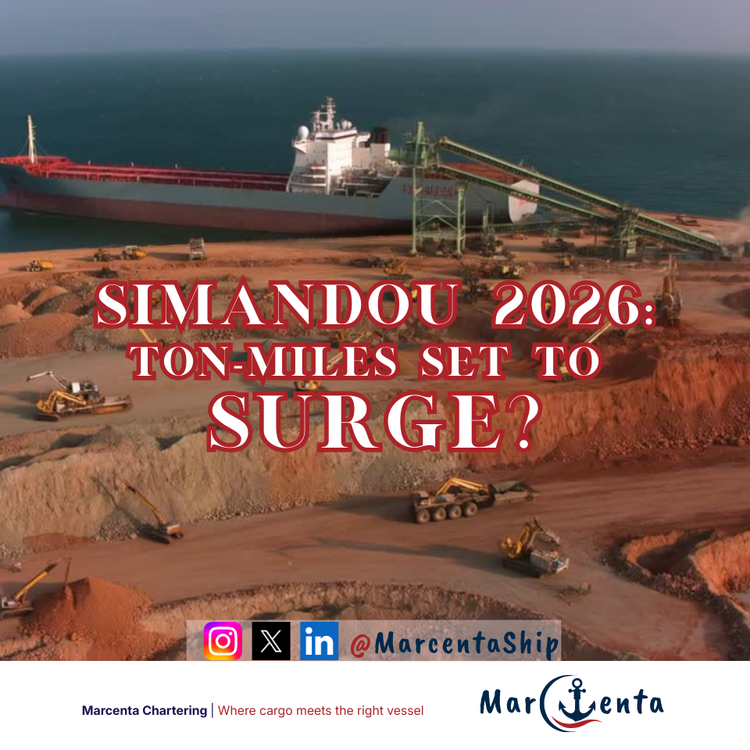
What Is the Simandou Iron Ore Project and Why Does It Matter in 2026?
The Simandou iron ore project in Guinea, long regarded as the world’s largest undeveloped high-grade deposit, has finally transitioned from decades of delays to active production. First exports commenced at the end of 2025, with 2026 marking the significant ramp-up phase. Analysts anticipate substantial volume growth over the next 24–36 months.
How Will Longer Routes Affect Ton-Mile Demand?
The true game-changer for dry bulk shipping lies in geography. Unlike the dominant Brazil-to-China C3 routes, Guinea-to-China voyages are considerably longer. This structural advantage translates directly into increased ton-mile demand—the primary driver of Capesize earnings. Each additional million tonnes from West Africa generates millions more ton-miles, offering potential long-term support to freight rates amid rising fleet growth.
Peak Production Estimates: Boom or Oversupply Risk?
Current projections suggest Simandou could eventually reach over 100 Mtpa at full capacity. Its premium 65%+ Fe content may displace lower-grade domestic Chinese ore while sustaining strong seaborne import needs. However, risks persist: softer Chinese steel demand, particularly from the property sector, could turn this new supply into an oversupply burden.
What Does This Mean for Shipowners and Charterers in 2026–2028?
Many brokers are already factoring in a ton-mile boost, yet others caution that full infrastructure maturity (rail and port) may delay the impact. The balance between new volume and Chinese consumption will likely define dry bulk market sentiment for years.
At Marcenta, we track these structural shifts daily to secure optimal fixtures for our clients. Explore our dry bulk chartering services and see how we can position you in emerging West African trades.
Do you believe Simandou will prove a sustained tailwind for Capesize rates, or will increased supply eventually cap the upside? Share your analysis in the comments below.